

Event Overview of How Japan Sumo Tournament System Works 2026 Guide
How Japan Sumo Tournament System Works 2026 Guide?The January Grand Sumo Tournament (Hatsu Basho), held from Sunday, January 11 to Sunday, January 25, 2026, is the first professional sumo tournament of the year in Japan. Taking place at Ryōgoku Kokugikan in Tokyo, this 15-day honbasho is more than a sporting event; it is a cultural institution, blending competition with centuries-old rituals and ceremonial traditions.
How can I make a group booking?
For group bookings, please reach out via our Contact Us page with your event name, date, and number of tickets needed. Our team will prepare the best available options and assist you personally.
Contact Us →For overseas visitors, understanding the tournament system—including scheduling, divisions, rankings, and ticketing—is key to a smooth and enjoyable experience.
Global Context: Sumo as Japan’s National Sport
While sumo has a growing international audience, live attendance in Japan follows systems primarily designed for domestic participants. Unlike many international sports, the honbasho operates with daily match sequences, formal rituals, and evolving wrestler rankings (banzuke), all of which contribute to the unique Japanese sumo experience.

Tournament Structure and Daily Progression
A honbasho runs for 15 consecutive days, with each wrestler competing once per day. Matches are organized by divisions, each with its own start time:
- Morning (8:40–10:00 AM): Lower divisions — Jonokuchi, Jonidan, Sandanme, and Makushita
- Mid-Afternoon (~2:30 PM): Jūryō division bouts
- Late Afternoon (~3:45 PM): Makuuchi division entrance ceremonies
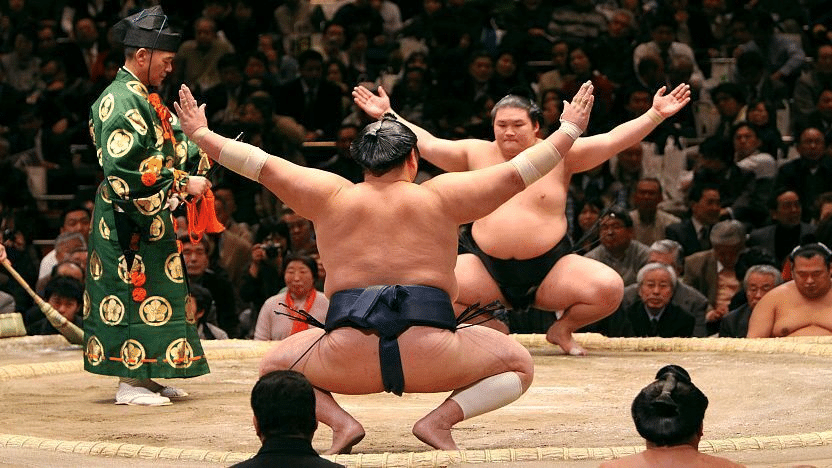
- Evening (4:10–6:00 PM): Top-division matches and closing rituals, including the yumitori-shiki bow-twirling ceremony
This structured flow allows visitors to plan their day according to which divisions or ceremonies they most wish to observe. It is common for spectators to arrive early for a full-day experience or enter later to watch only the top-division matches.
Rankings and the Banzuke
The banzuke is the official ranking of sumo wrestlers, released around December 22, 2025, ahead of the January tournament. These rankings determine match pairings, wrestler positioning in the ring, and overall tournament storylines. Understanding the banzuke provides context for match outcomes and audience expectations.
Ticketing Systems
Tickets for the 2026 Hatsu Basho go on sale Saturday, December 6, 2025. Japanese ticketing systems are primarily designed for domestic users, which may be unfamiliar to some overseas visitors.
Common Ticket Types Include:
- Ringside seats: Closest to the dohyo for an immersive experience
- Box seating: Tatami-style for small groups
- Arena/stand seating: Elevated seating for broader views
Tickets are typically sold per day, and entry is valid for the full day, with limited re-entry allowed. Weekends and final days often sell out quickly, making early planning critical.
Visitors seeking support or clarification on ticketing and systems can contact Jasumo at
https://jasumo.com/contact/
Visiting Ryōgoku Kokugikan
Location: 1-3-28 Yokoami, Sumida City, Tokyo 130-0015
Nearest Station: Ryōgoku Station (JR Sobu Line or Toei Oedo Line)
The arena’s design emphasizes ceremonial visibility, with seating arranged to provide clear views of matches and rituals. Public transportation is strongly recommended due to limited parking and high foot traffic during tournament days.
Common Challenges for Overseas Visitors

- Navigating Japanese ticketing platforms
- Choosing the right seat type without prior experience
- Understanding daily schedules and match order
- Arriving early during cold January mornings
These challenges are normal and reflect differences between Japanese and overseas event systems. Preparation can help mitigate stress and ensure a more enjoyable visit.
Enhancing the Visitor Experience: How Japan Sumo Tournament System Works 2026 Guide
Visitors often extend their experience by exploring Ryōgoku district attractions or sampling chanko-nabe, the traditional sumo hot pot. Mobile connectivity is also useful for navigating the area, checking train routes, and confirming ticket details. Many visitors arrange Wi-Fi access before arrival via
https://omoriwifi.com/
For broader context on living and traveling in Japan, overseas visitors can refer to
https://comfyscareer.com/
Conclusion : How Japan Sumo Tournament System Works 2026 Guide
The January Grand Sumo Tournament operates within a detailed and tradition-rich system, from match scheduling to ticketing, venue flow, and ceremonial rituals. Understanding these systems allows overseas visitors to attend with confidence, appreciate the depth of sumo culture, and engage fully with one of Japan’s most enduring sporting traditions.
Frequently Asked Questions: How Japan Sumo Tournament System Works 2026 Guide
Japan’s professional sumo system is based on six major tournaments each year, where wrestlers compete to improve or maintain their rankings.
A basho is an official sumo tournament. Each basho lasts 15 days and features daily matches between ranked wrestlers.
Wrestlers are ranked according to their performance in previous tournaments. Winning records generally lead to promotion, while losing records can result in demotion.
The January Basho 2026 is expected to take place in Tokyo and will be the first major sumo tournament of the year.
Yes, foreign visitors can attend sumo tournaments by purchasing tickets in advance through official ticket providers or authorized services.
