
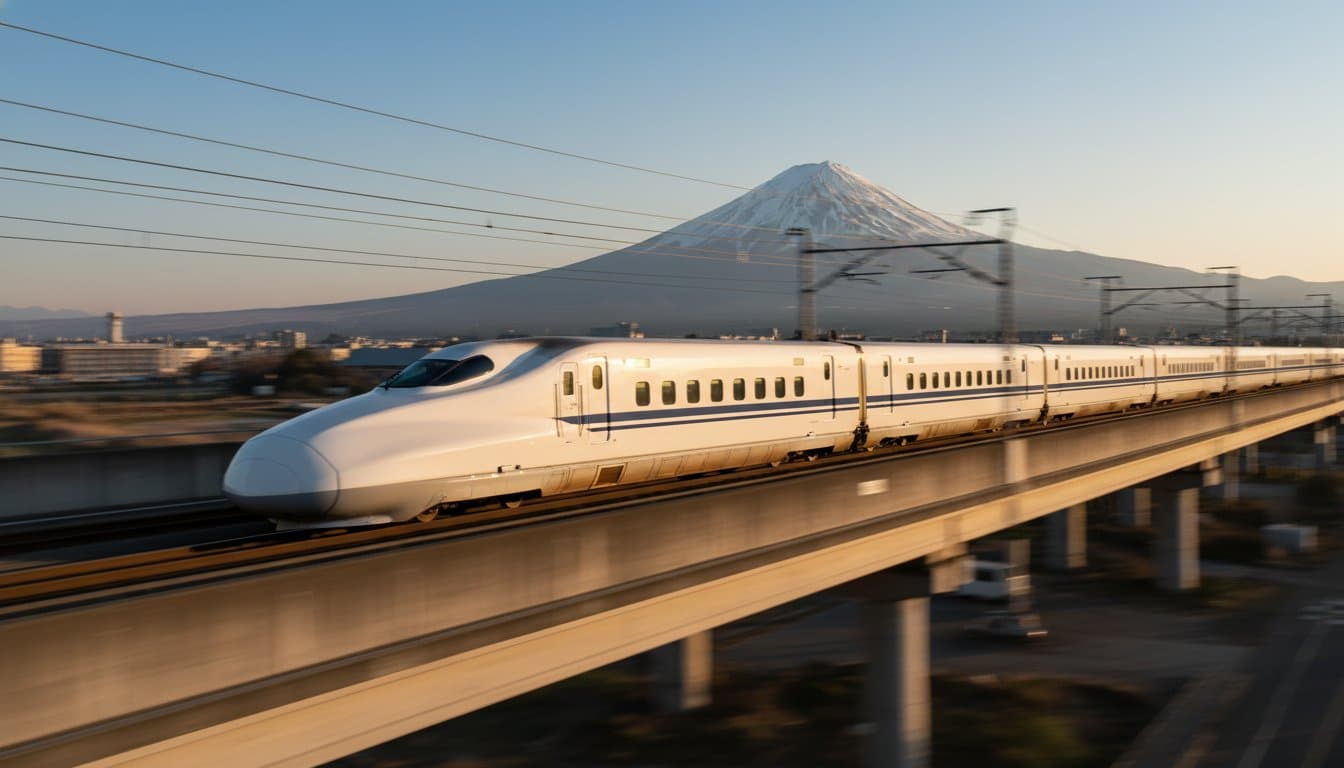
Planning your shinkansen tokyo to osaka journey and feeling a bit overwhelmed? From deciphering the differences between Nozomi and Hikari trains to figuring out if a Japan Rail Pass is truly cost-effective for your trip, the details can be confusing for international visitors. Add the challenge of navigating huge terminals like Tokyo Station, and it’s easy to feel anxious instead of excited for what should be a highlight of your Japan adventure.
How can I make a group booking?
For group bookings, please reach out via our Contact Us page with your event name, date, and number of tickets needed. Our team will prepare the best available options and assist you personally.
Contact Us →This is where we help. Our ultimate 2025 guide is designed to make your bullet train experience simple and stress-free. We provide clear, up-to-date information on tickets, prices in Japanese Yen (¥), train schedules, and a straightforward breakdown of the JR Pass. By the end, you’ll be ready to book your ticket with confidence and enjoy one of the world’s most iconic train rides.
Understanding Your Shinkansen Options: Nozomi, Hikari & Kodama
Traveling between Japan’s two largest metropolitan areas for a concert or sporting event is remarkably simple and efficient. The most popular choice for your journey is the bullet train, specifically the famous Tokaido Shinkansen line. This high-speed railway connects the two cities in just a few hours, offering a comfortable and reliable alternative to flying. When you book a shinkansen tokyo to osaka ticket, you will choose from three main train services on this route: Nozomi, Hikari, and Kodama. Each offers a different balance of speed, stops, and cost, so understanding them is key to planning your trip.
To help you decide, here is a simple breakdown of the options:
| Train Type | Travel Time (Approx.) | Stops | Japan Rail Pass Eligibility |
|---|---|---|---|
| Nozomi (のぞみ) | 2.5 hours | Fewest | Requires a supplementary fee (e.g., ¥4,960) |
| Hikari (ひかり) | 3 hours | Moderate | Fully covered |
| Kodama (こだま) | 4 hours | All stations | Fully covered |
Nozomi (のぞみ): The Fastest Choice
If your priority is speed, the Nozomi is your best option. It completes the trip in approximately 2.5 hours by making only the most essential stops at major stations like Nagoya and Kyoto. Nozomi trains are also the most frequent, departing every 10-15 minutes during peak hours. The crucial detail for many international visitors is that the standard Japan Rail Pass does not fully cover this service; you must purchase a special supplementary ticket to ride it.
Hikari (ひかり): The Balanced Option
The Hikari offers a fantastic balance between speed and cost, especially for Japan Rail Pass holders. At around 3 hours, the journey is only slightly longer than the Nozomi. It makes a few more stops at secondary stations, but it is fully covered by the Japan Rail Pass, making it a very popular and economical choice. With departures roughly every 30 minutes, it remains a convenient and practical option for getting between events in Tokyo and Osaka.
Kodama (こだま): The Local Service
As the local service on the Tokaido line, the Kodama is the slowest of the three, taking about 4 hours. This is because it stops at every single station along the route. While not ideal if you’re in a hurry, the Kodama is perfect for travelers whose destinations are smaller towns like Atami or Mishima. Like the Hikari, it is also completely covered by the Japan Rail Pass, offering a flexible option for more complex itineraries.
How to Buy shinkansen Tokyo to Osaka Tickets: A Step-by-Step Guide for Foreigners
Navigating Japan’s world-class train system can seem daunting, but buying Shinkansen tickets is a straightforward process with the right information. Whether you prefer planning ahead or buying on the day, there are easy options available for international visitors. Before you book, it’s helpful to know the basic seat types. A reserved seat (指定席, shiteiseki) guarantees you a specific spot, which we highly recommend during peak seasons. A non-reserved seat (自由席, jiyūseki) is slightly cheaper but operates on a first-come, first-served basis. You can also choose between the comfortable Standard Car and the more spacious Green Car, which offers extra legroom for a premium price.
Booking Online in Advance
Securing your tickets before you travel is the most reliable way to ensure you get the train you want. You have two main options:
- Official JR Websites: Services like Smart-EX are the direct source for booking. You can find detailed timetables and official pricing on the JR Central official website. While reliable, some platforms may have limitations regarding foreign credit cards.
- Third-Party Providers: Websites like Klook or Japan Rail Pass offer user-friendly interfaces entirely in English and accept a wider range of payment methods. After booking, you’ll typically receive a QR code to scan at the ticket gate or instructions to exchange a voucher for a physical ticket at a station machine.
Buying at the Train Station in Japan
If you prefer to buy tickets upon arrival, Japan’s train stations make it easy. Your journey on the shinkansen tokyo to osaka line can be booked in minutes.
The quickest method is using the ticket vending machines, which all have an English language option. Simply follow the on-screen prompts:
- Select “English.”
- Choose “Shinkansen” and then “Reserved Seat” or “Non-reserved Seat.”
- Enter your departure and arrival stations (e.g., Tokyo and Shin-Osaka).
- Select your travel date, time, and the number of passengers.
- Confirm your selection and pay with cash or a credit card.
Alternatively, you can visit a JR Ticket Office (Midori no Madoguchi) for personal assistance. Have your travel details ready-destination, date, time, and number of people-to ensure a smooth and efficient transaction with the helpful station staff.
Japan Rail Pass vs. Single Ticket: The Definitive Cost Breakdown
One of the most common questions for event goers planning their travel is, “Is the Japan Rail Pass worth it?” The answer depends entirely on your itinerary. A simple round trip between two cities has a very different cost profile than a multi-city tour. To make the decision easy, we’ve broken down the costs for two common scenarios.
When a Single Ticket is Cheaper
This scenario is for travelers whose main focus is an event in one city, with only one major side trip. Let’s say your plan is to travel from Tokyo to Osaka for a concert and then return to Tokyo.
- A standard one-way reserved seat on the Nozomi train, the fastest and most direct option for the shinkansen tokyo to osaka route, costs approximately ¥14,720.
- A round trip would therefore cost around ¥29,440. For the most accurate and up-to-date pricing, it is always best to consult the JR Central Official Website.
- Compare this to the 7-day Japan Rail Pass, which costs ¥50,000.
Conclusion: If your travel is limited to a simple Tokyo-Osaka round trip, buying individual tickets is significantly more economical. The savings are substantial, leaving you with more to spend on event merchandise or another great meal.
When the Japan Rail Pass Makes Sense for the shinkansen tokyo to osaka Route
This scenario applies if you plan to visit multiple cities in a short time. Imagine an itinerary where you travel from Tokyo to Kyoto, head to Osaka for a festival, and then take a day trip to Hiroshima before returning, all within seven days.
The cost of purchasing individual tickets for each of these long-distance journeys would quickly add up and easily surpass the price of the pass. The Japan Rail Pass offers unlimited travel on eligible JR trains, providing excellent value for a packed travel schedule. Furthermore, the pass offers added convenience; it covers many local JR lines within cities, like the essential Yamanote Line in Tokyo and the Osaka Loop Line, saving you money on daily transport.
Conclusion: For travelers planning a fast-paced, multi-city tour of Japan, the Japan Rail Pass is an excellent investment that offers both great value and convenience.
Your Travel Day: A Guide to a Smooth Journey on the shinkansen Tokyo to Osaka
The day you travel from Tokyo to your event in Osaka should be exciting, not stressful. Navigating Japan’s world-class train system is much easier than it looks. This guide breaks down your journey on the shinkansen tokyo to osaka route into simple, manageable steps, ensuring you arrive relaxed and ready for your event.
Departing from Tokyo: Tokyo Station vs. Shinagawa
You can board the Shinkansen at two main stations in Tokyo. Tokyo Station is a massive hub with endless shops and restaurants, but its size can be confusing for first-time visitors. For a more straightforward experience, we recommend Shinagawa Station. It is smaller and the layout is simpler, making it easier to find your platform. In either station, look for the large blue signs for the Tokaido-Sanyo Shinkansen lines. The digital departure boards are in English and will clearly display your train name (e.g., Nozomi), departure time, and platform number.
The Onboard Experience on the shinkansen Tokyo to Osaka
Once you pass through the ticket gates, your journey becomes very comfortable. Here’s what to expect on the train:
- Luggage: Standard carry-on and medium-sized suitcases fit in the overhead racks. If you have a very large suitcase (total dimensions over 160 cm), you must reserve a seat with oversized baggage space in advance.
- Finding Your Seat: Your ticket clearly shows your car (車両), row (列), and seat number (席). The car numbers are marked on the platform, making it easy to line up in the right spot.
- Food & Drink: Don’t miss the experience of buying an ekiben (station bento box) before you board. These delicious, beautifully packaged meals are a highlight of Japanese train travel.
- Amenities: Most Shinkansen trains offer free Wi-Fi, though the connection can be intermittent. Power outlets are available in most seats, typically by the window or on the seat pedestal in front of you. Clean restrooms are located in nearly every car.
Arriving at Shin-Osaka Station
A crucial tip for all travelers: your train arrives at Shin-Osaka Station, which is a different location from the central Osaka Station. Do not worry, as connecting is simple. From Shin-Osaka, you can easily transfer to local lines to reach the city’s main districts. To get to Umeda (the area around Osaka Station), take a local JR train one stop. For popular areas like Namba, Dotonbori, or Shinsaibashi, follow the signs for the red Midosuji Subway Line, which provides direct access to the heart of the city.
With your travel sorted, you can focus on the main event. Find secure tickets for concerts and sports in Osaka at jasumotickets.com.
Welcome to Osaka! What to See, Do, and Experience
Your journey on the shinkansen from Tokyo to Osaka is complete, and now the real adventure begins. You’ve arrived in a city famous for its incredible food, vibrant nightlife, and welcoming locals. Known as Japan’s kitchen, Osaka offers a feast for the senses, from the sizzling street food stalls of Dotonbori to the historic grandeur of Osaka Castle. It’s a city that buzzes with an energy all its own, making it the perfect destination for unforgettable live events.
Getting from Shin-Osaka to Key Areas
Planning this final leg of your journey, from the station to your accommodation, is just as important as the train ride itself. While Osaka’s public transport is excellent, for other destinations, especially when arriving at an airport, a pre-booked private transfer is often the most stress-free option. Services like Click2Shuttle in Croatia are a great example of how to seamlessly bridge that gap from the terminal to the city.
Shin-Osaka Station is your gateway to the city, but it’s located slightly north of the main downtown hubs. Navigating to your hotel or first attraction is simple with Osaka’s efficient public transport system. Here are the most direct routes to popular areas:
- To Umeda (Osaka Station): For access to the huge Osaka Station City complex, department stores, and the Umeda Sky Building, take the JR Kyoto Line just one stop south.
- To Namba/Dotonbori: To reach the heart of Osaka’s entertainment and food district, take the red Midosuji subway line directly from Shin-Osaka Station. It’s a fast and easy 15-minute ride.
- To Osaka Castle: To see the city’s most famous landmark, you can transfer at Osaka Station to the JR Osaka Loop Line and get off at Osakajokoen Station.
Explore Osaka’s Unforgettable Live Events
Osaka is a major stop for international music tours, premier sporting events, and unique theatrical performances. The city’s passion for entertainment is clear, with world-class venues like the massive Kyocera Dome and the iconic Osaka-jo Hall, located right next to the castle. The ease of traveling via the shinkansen from Tokyo to Osaka means you can seamlessly transition from your journey into an electrifying concert or sports match.
Planning your trip around a live event is one of the best ways to experience modern Japanese culture. To make your planning simple and secure, you can find verified tickets for a wide range of events. Find tickets for concerts and events in Osaka with Jasumo Tickets!
Your Journey from shinkansen Tokyo to Osaka: The Adventure Begins
You are now fully equipped to navigate one of Japan’s most iconic travel routes. From choosing between the Nozomi, Hikari, and Kodama trains to understanding the best way to purchase tickets, you can plan your trip with confidence. This guide has simplified the process, ensuring your journey on the shinkansen tokyo to osaka is as smooth and efficient as the train itself.
The efficiency of Japan’s public transport is a great reminder of how important reliable transportation is in our daily lives. For car owners back in Singapore, ensuring your vehicle is just as dependable is key, and workshops like motoserv.sg are dedicated to providing that peace of mind.
Now that your travel between cities is sorted, it’s time to plan the highlights of your stay. Make your trip truly unforgettable by experiencing Japan’s vibrant live entertainment culture. Jasumo Tickets is your bridge to sold-out concerts and thrilling sports events, offering easy and secure booking designed for international fans.
Planning your Japan trip? Find unforgettable concerts and events in Tokyo & Osaka!
Enjoy the incredible sights, sounds, and experiences that await you in two of Japan’s most amazing cities. Happy travels!
Frequently Asked Questions: shinkansen Tokyo to Osaka
Shinkansen tickets go on sale one month before the travel date. For a popular route like the shinkansen tokyo to osaka, we recommend booking as early as possible, especially during peak seasons like Golden Week or New Year holidays. For less busy periods, booking a few days ahead is often fine.
You can bring two pieces of luggage, with each piece’s total dimensions (length + width + height) under 250 cm. Bags between 161 cm and 250 cm are “oversized” and require a reservation for a dedicated space. This reservation is free when booked with your ticket.
Yes, you can stay connected and charged on your journey. Most Shinkansen lines offer a complimentary “Shinkansen Free Wi-Fi” service that is easy to access. For charging your devices, power outlets are available in most cars.
Can I eat and drink on the Shinkansen?
Absolutely. You can eat and drink on the Shinkansen. Many passengers enjoy ekiben (boxed meals) and drinks during travel, but keep noise and cleanliness respectful.
For best Mt. Fuji views, sit on the right side when traveling from Tokyo toward Osaka/Kyoto on the Shinkansen (Tokaido line), especially between Shizuoka and Shin-Fuji stations.
Yes, Shinkansen trains are generally accessible for passengers with disabilities, offering wheelchair spaces, accessible restrooms, elevators, ramps, and staff assistance at major stations for easier boarding and travel support.
